Human-Centered Robotics in Dynamic and Unstructured Construction Environments
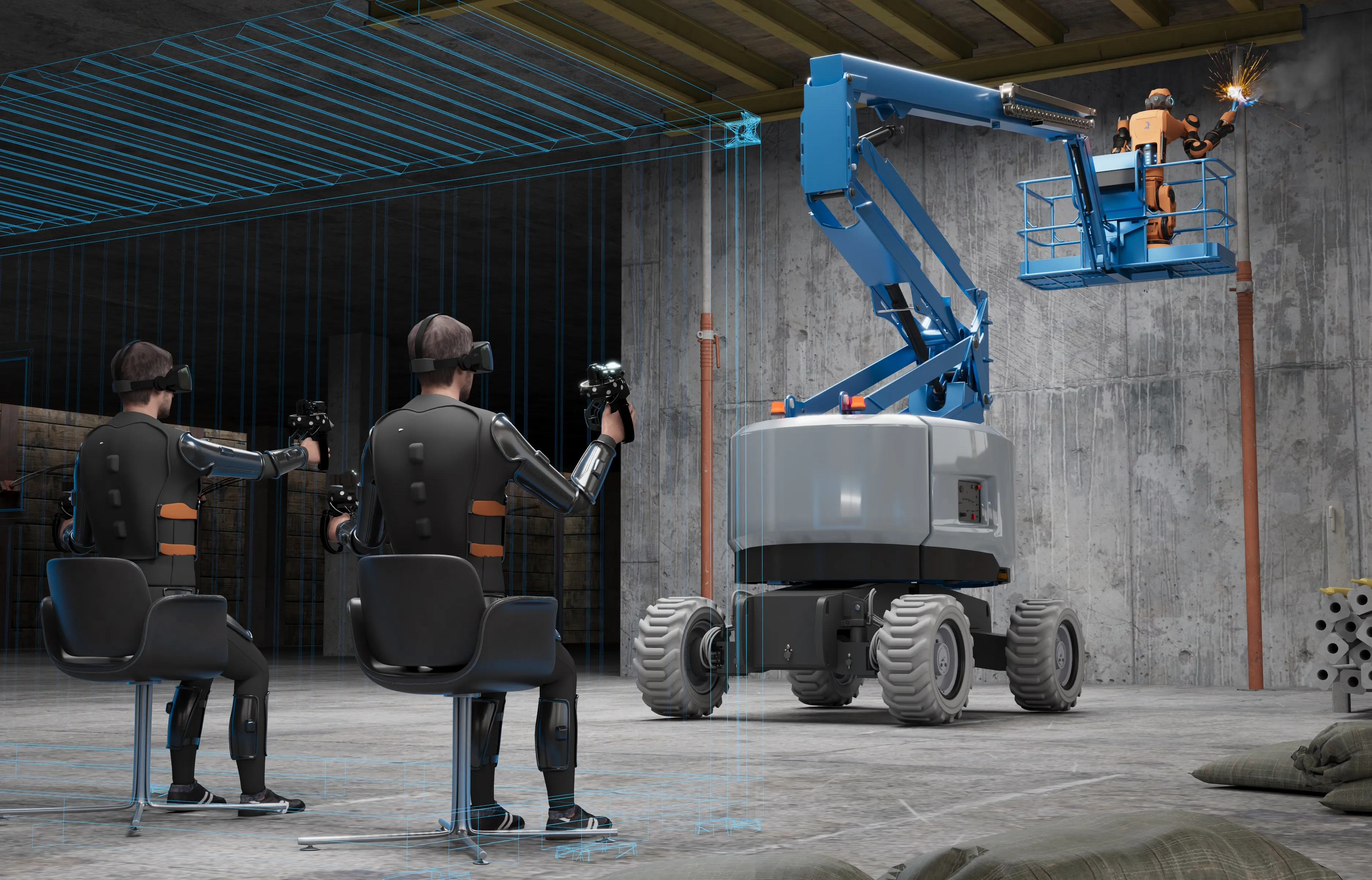
Construction robotics is moving quickly from controlled shop floors into real construction sites. Robots are already being used for off-site modular construction and on-site tasks such as overhead drilling, wall painting, and autonomous excavation. This shift is motivated by productivity and safety needs, but it is also shaped by deeper workforce challenges, including the aging of skilled workers and mismatches in labor supply and demand.
At Seoul National University, Prof. Changbum “Ryan” Ahn and the Construction Engineering and Management Lab (SNUCEM) are studying how robots can be deployed in a way that supports construction workers rather than simply replacing human labor. The team also leads the Smart Construction AI Research Center at the SNU AI Institute, where researchers connect artificial intelligence, robotics, and construction engineering.
Why Construction Sites Are Hard for Robots
Construction environments are dynamic, unstructured, and often different from the models used during planning. The gap between an as-planned model and the as-built workpiece can create errors that directly affect robot deployment quality.
The work itself is also difficult to automate. Construction tasks are rarely perfectly repetitive, and many require long planning horizons, local judgment, and adaptation to changing physical conditions. Beyond the technical barriers, robotization also faces social and organizational resistance from stakeholders who are concerned about safety, job loss, or the practical cost of adoption.
This is why human-robot collaboration is central to SNUCEM’s approach. The question is not only how to make robots more capable, but how to let workers coordinate with them effectively on site.
Interfaces for In-Situ Improvisation
One line of work focuses on human-centered interfaces for construction robots. For example, SNUCEM has developed multimodal interaction methods that allow workers to improvise spatial tasks for overhead drywall cutting robots directly on site.
With these interfaces, novice users without robotics expertise can operate robots on the fly, without requiring a pre-built building information model or a simulation of the environment. In evaluations, this approach improved task accuracy compared with conventional construction robot controllers.
XR Teleoperation for Construction Robots
The team is also exploring teleoperation through immersive visualization and control. Virtual reality, augmented reality, and extended reality can help operators remotely control construction robots and equipment with better situational awareness.
This research is especially important for work-at-height and other hazardous construction tasks. The design challenge is to improve safety and precision while keeping cognitive load low enough for productive operation.
Adaptive Navigation for Safety Monitoring
SNUCEM is not only studying robots that perform construction work. The team is also developing robotic systems that can monitor worker safety on site.
One project uses reinforcement learning-based navigation so mobile robots can adapt their viewpoints while monitoring personal protective equipment. By reducing visual occlusion, adaptive navigation can improve PPE detection compared with fixed cameras or simple mobile surveillance systems.
Toward Worker-Centered Automation
The long-term goal is a practical model of automation where construction workers can operate robots themselves, without relying on specialized robot operators for every task. That vision requires robots that can work alongside people, communicate through intuitive interfaces, and adapt to changing field conditions.
There are still many barriers before construction robots become common across jobsites. But by developing human-robot interfaces, XR teleoperation methods, and adaptive navigation systems together, SNUCEM is helping shape a version of construction automation that extends human capability rather than removing people from the process.
References
- ABB Robotics: Construction
- Y. Kim, H. Kim, R. Murphy, S. Lee, and C.R. Ahn, “Delegation or Collaboration: Understanding Different Construction Stakeholders’ Perceptions of Robotization,” Journal of Management in Engineering, 38, 04021084, 2022. https://doi.org/10.1061/(ASCE)ME.1943-5479.0000994
- S. Yoon, Y. Kim, M. Park, and C.R. Ahn, “Effects of Spatial Characteristics on the Human-Robot Communication Using Deictic Gesture in Construction,” Journal of Construction Engineering and Management, 149, 04023049, 2023. https://doi.org/10.1061/JCEMD4.COENG-12997
- S. Yoon, M. Park, and C.R. Ahn, “LaserDex: Improvising Spatial Tasks Using Deictic Gestures and Laser Pointing for Human-Robot Collaboration in Construction,” Journal of Computing in Civil Engineering, 38, 04024012, 2024. https://doi.org/10.1061/JCCEE5.CPENG-5715
- S. Yoon, S. Shin, S. Lee, M. Park, and C.R. Ahn, “Evaluating Viewpoint Control Techniques in Virtual Reality Interface for Teleoperating Construction Welding Robots,” in Proceedings of the 31st International Workshop on Intelligent Computing in Engineering, EG-ICE, 2024, pp. 345-354.
- DNEWS coverage